All case studies
Case study 01 / 03
Enterprise B2B · Data Centers

A design system grown from incomplete foundation to enterprise infrastructure.

As Director of UX/UI, I lead UX strategy across Digital Realty's enterprise portal ecosystem — owning a design system that grew from an incomplete foundation into a mature, organization-wide platform used by product and engineering teams to accelerate delivery. AI-assisted workflows are integrated across the process, post-acquisition consolidation is ongoing, and the role itself grew from a staff-augmented engagement into a long-term platform ownership position.

2022 Engagement start
Still evolving
01 — The situation

Digital Realty is one of the largest data center operators in the world — a global enterprise platform serving customers across dozens of markets. When I stepped into the Director of UX/UI role, the platform had a clear problem: two core portals that teams depended on daily, built without a coherent UX strategy, on top of a design system that existed in name only.

The design system was technically present but practically ignored. Components had diverged across teams. Coverage had significant gaps — designers were regularly inventing solutions that should have already existed. Front-end developers rebuilt from scratch rather than pulling from a shared source. Inconsistency wasn't aesthetic — it was a delivery infrastructure problem.

Underneath the system problem was a deeper usability problem: the portals themselves had accrued years of complexity with no guiding UX strategy. Navigation was opaque. Information hierarchy was unclear. The experience of managing a global data center footprint didn't match the sophistication of the business behind it.

My mandate was clear: own it all. Strategy, system, portals, governance, stakeholder relationships. Not advisory. Accountable. That included being the person who figured out how to integrate AI into the team's delivery workflow — practically, not experimentally — using Claude and Gemini across wireframing, research synthesis, prototyping, and QA.

Client
Digital Realty (via Propane)
My role
Director of UX/UI — end-to-end UX strategy, design system governance, portal redesign, executive stakeholder partnership
Platform
Global Portal · ServiceFabric Portal
Stakeholders
Executive leadership, Product, Engineering, Marketing
Timeline
2022 — ongoing
What I inherited
Inconsistent components, incomplete coverage, no governance model, deep usability issues across both portals
02 — My role and mandate
01
Facilitate sprints that generate trust
Five sprints. Five teams. Senior stakeholders who had competing priorities and limited availability. My job was to produce outcomes so clear that the business case for continued engagement made itself.
02
Own the UX strategy
Once the staff aug role evolved, I took end-to-end ownership of UX direction across both core portals. Every design decision flowed through me or with my direct involvement — not advisory, accountable.
03
Build the infrastructure for good design
Transform an incomplete design system into governed enterprise infrastructure. Establish the governance models, processes, and stakeholder relationships that make quality sustainable — not dependent on heroics.
03 — The strategic bets I made
Bet 01
Extend the existing system — don't restart it
A design system had been initiated before I arrived. Rather than scrapping it, I chose continuity — extending and operationalizing what existed, preserving established patterns while evolving the system into shared platform infrastructure. Restarting would have cost trust and time the org didn't have.
Bet 02
Treat the system as a product, not an artifact
Design systems fail when they're treated as deliverables. I positioned ours as a living product platform with a governance model, clear ownership, and a defined process for when to use existing patterns versus when to request extensions — enabling scale without fragmentation.
Bet 03
Extend desktop patterns responsively rather than introduce new paradigms
When ServiceFabric required mobile and tablet support, the pressure was to design new mobile-native patterns. I pushed back — extending existing desktop patterns into responsive variants instead. This preserved system integrity while enabling cross-device use, and avoided the fragmentation that new paradigms always introduce.
Bet 04
Build executive partnership as a governance tool
Product owners across Digital Realty's portals were brought into a clear coll
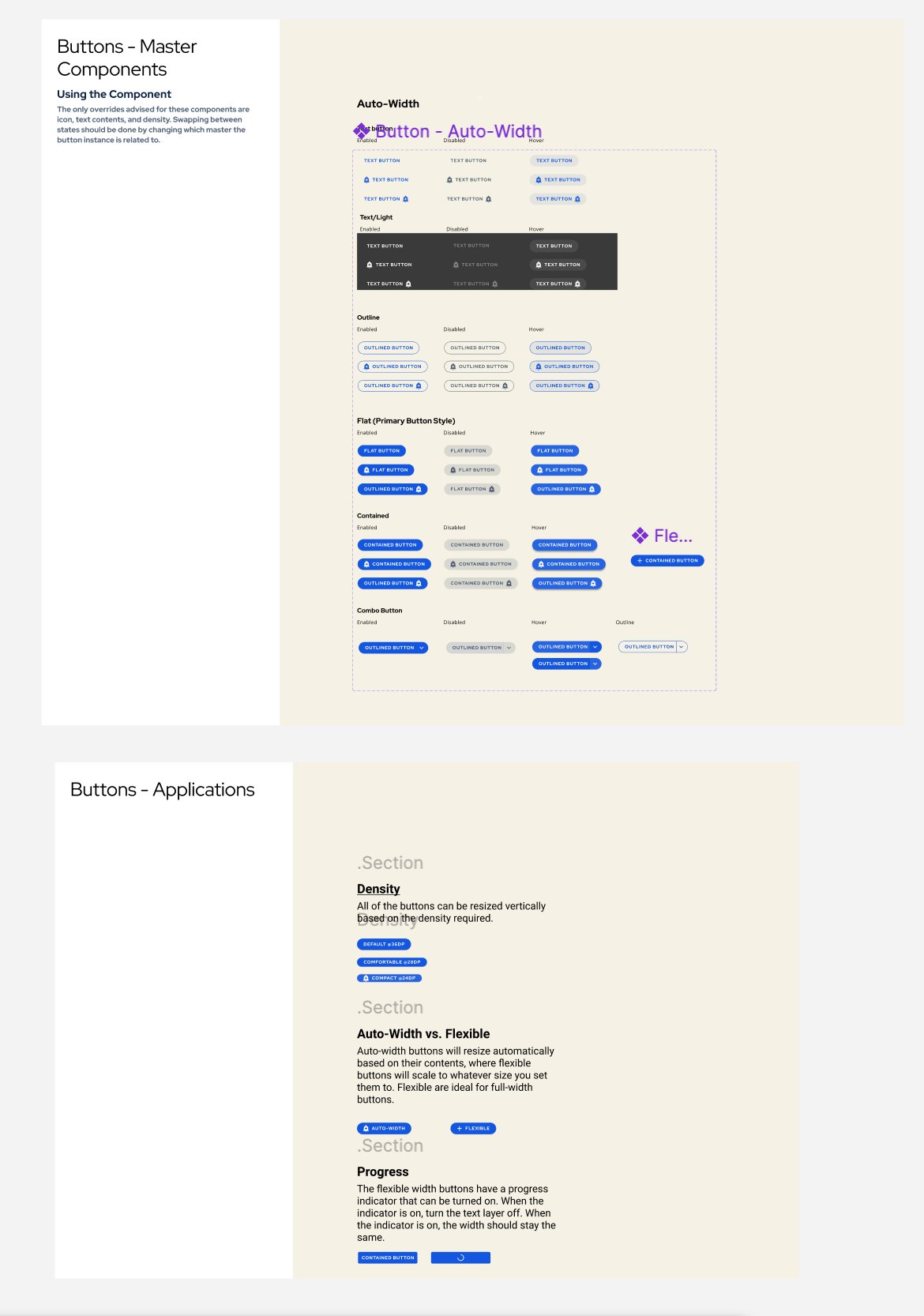
Digital Realty design system — button components master sheet
Design system — component master sheet
Button components across all states, variants, and densities — auto-width, flexible, outlined, flat, contained, and combo. Governed documentation that engineering could pull from directly.
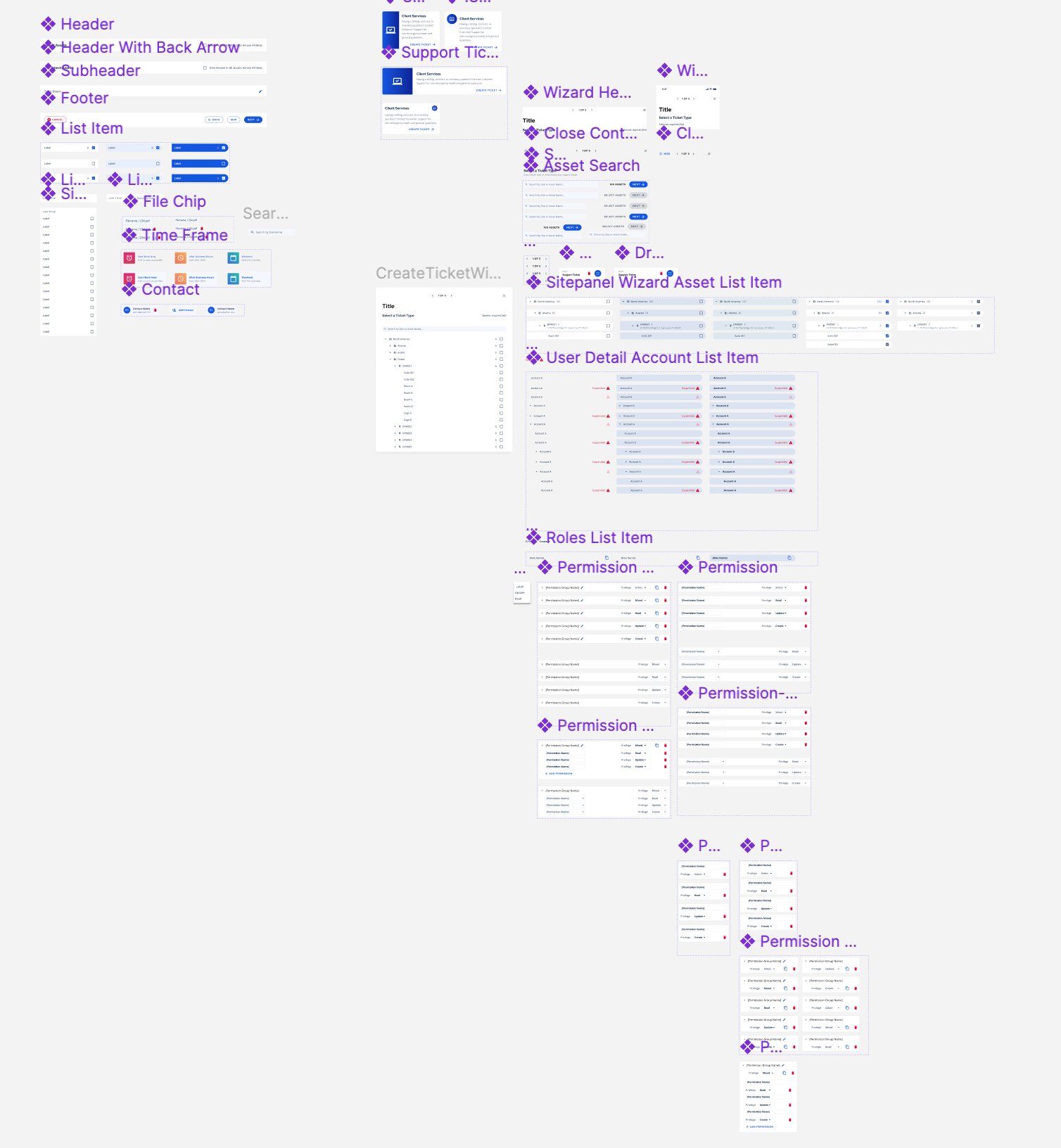
Digital Realty design system — component library and patterns
Design system — component library
Headers, list items, file chips, time frames, wizard patterns, asset search, and permission management components — each governed with usage documentation and accessibility standards.
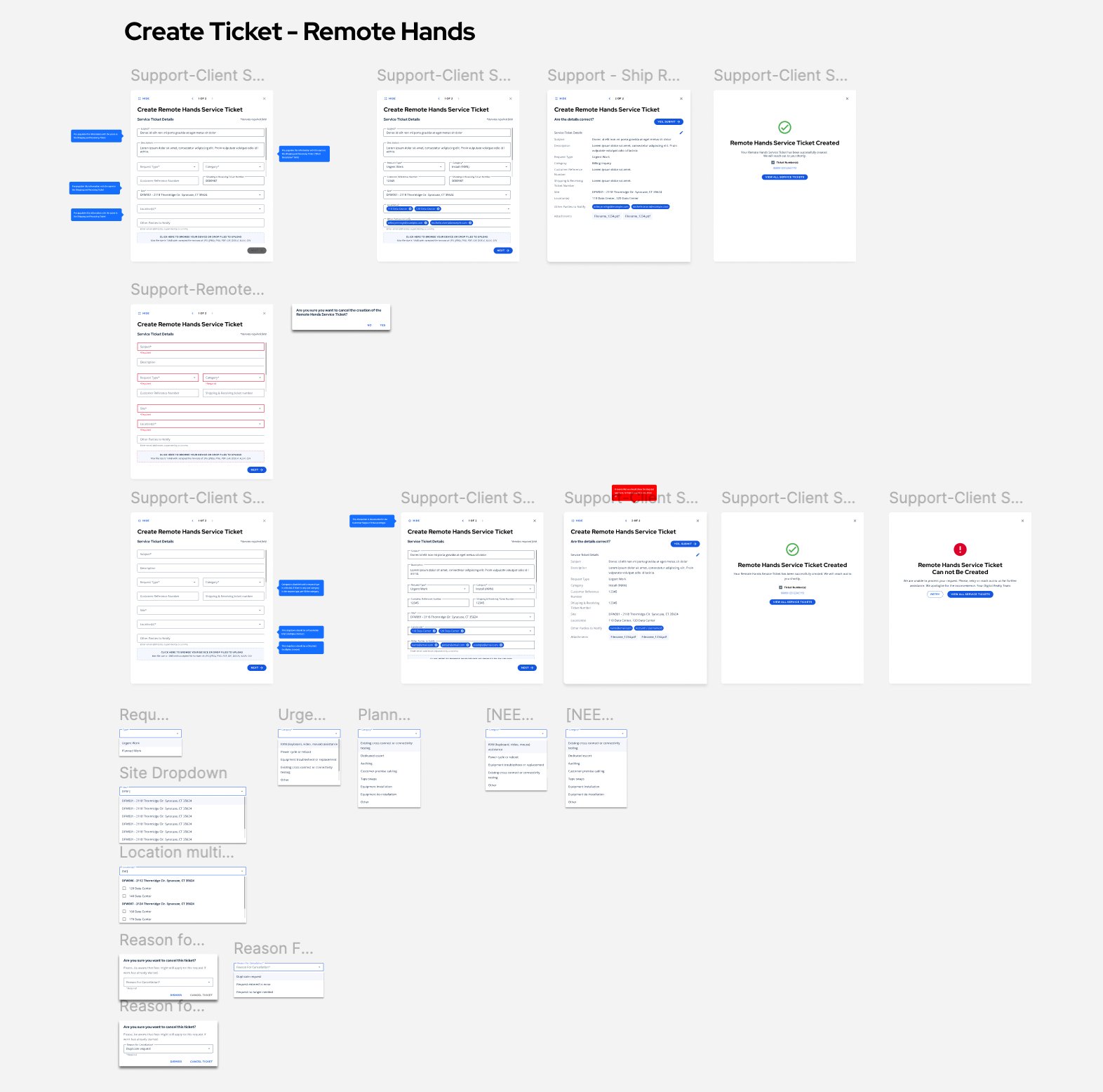
Digital Realty — create ticket remote hands flow
ServiceFabric — remote hands ticket creation flow
End-to-end ticket creation flow across multiple states — form entry, review, confirmation, error handling, and cancellation. Every edge case mapped and designed against the system.
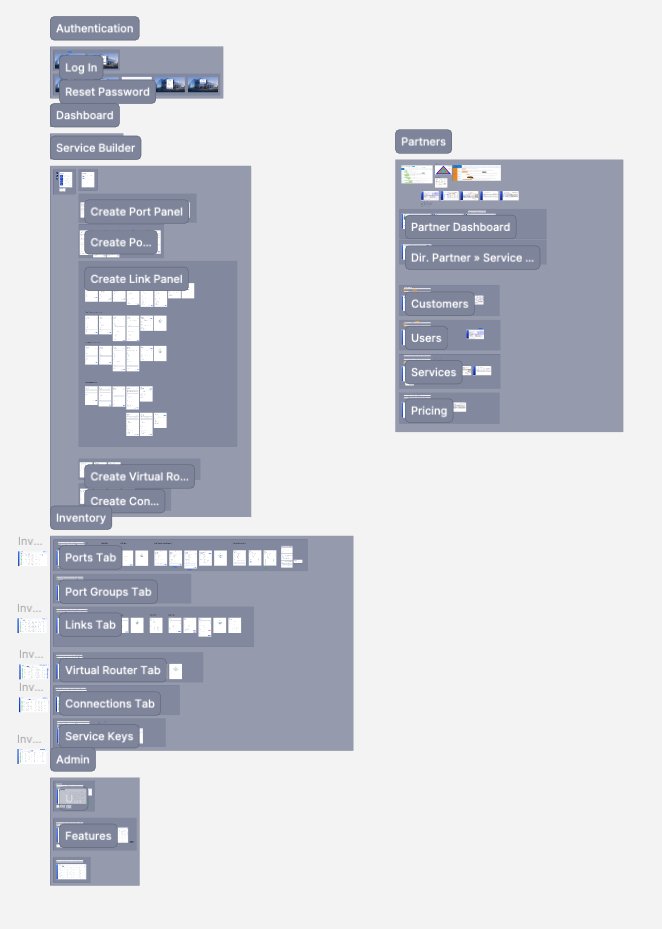
Digital Realty — information architecture and sitemap
Platform IA — authentication, service builder, inventory, admin
Information architecture across the full portal ecosystem — authentication flows, service builder, inventory management, and partner-facing sections, structured for multi-team ownership.
caption">
Design system governance model
A defined lifecycle for every component — from request through deprecation. Governance turned the system from a snapshot into a product that evolves without breaking.
05 — What changed mid-stream
The turn

We assumed early on that the biggest problem was the design system's completeness — fill the gaps, fix the inconsistency, done. What we discovered through the portal redesign work was that the system gaps weren't random. They mapped directly to places where teams had given up on the system and solved problems on their own.

That changed the approach. Instead of building components and expecting adoption, we went to the teams building workarounds and understood what they actually needed. The governance model was redesigned around making contribution easier — so teams had a path to get their solutions into the system rather than around it.

The post-acquisition consolidation work added another layer of complexity we hadn't fully anticipated. Merging acquired platforms into a coherent system meant the design system had to flex to accommodate patterns that hadn't been designed into it. That stress-tested the governance model early — and it held.

06 — Outcomes and impact
Front-end delivery speed across both portals
Delivery velocity
Design-to-dev rework through governed component usage
Rework reduction
Usability scores and task completion across core portal flows
User experience
Post-acquisition platform consolidation — multiple acquired systems integrated
Platform consolidation

The design system moved from an ignored artifact to enterprise platform infrastructure — the framing shift that mattered most. By prioritizing continuity, governance, and extensibility, Digital Realty established a scalable foundation for global operations and post-acquisition growth.

Front-end delivery time was measurably reduced through pattern reuse. Backend development still required custom implementation — that's an honest qualifier worth stating, because overclaiming outcomes undermines the real ones. What the system genuinely delivered was faster front-end velocity, reduced design-to-dev rework, and a clear model for integrating newly acquired platforms without starting from scratch each time.

The most meaningful signal: Digital Realty trusted the work enough to make the role permanent. A staff augmentation contract became an internal Director position — not because I negotiated for it, but because the platform work made the case.

07 — The lasting thing

The design system grew from an incomplete foundation into mature platform infrastructure — used by product and engineering teams across the organization to accelerate delivery.

Next case study
Building a UX org from scratch — The Children's Place