All case studies
Case study · Healthcare
Healthcare · Information Architecture · Research

Making sense of 20,000 pages for 35,000 members.

The American College of Radiology's website had grown into an unnavigable archive. No responsive design, no user-centered architecture, no clear path for a membership base of 35,000+ professionals. The work required research at scale, IA from the ground up, and a design system flexible enough to power an entire ecosystem of microsites.

20K+ Pages of content
1K+ Users tested
01 — The situation

The American College of Radiology is the professional membership organization for radiologists, radiation oncologists, and related specialists — over 35,000 members across a highly technical field. Their main website had grown to over 20,000 pages of content with no coherent structure, no responsive design, and no clear understanding of who was actually using it or what they were looking for.

The problem wasn't just information architecture. It was that ACR had never formally defined their users. They had a sense of who their members were — but no research-backed personas, no data on user behavior, and no framework for decision-making around content priority or navigation.

They needed a complete rethink: user research to define who the site was for, a new information architecture tested at scale, and a flexible design system that could power not just the main site but an entire ecosystem of branded microsites underneath it.
Client
American College of Radiology (ACR)
My role
User research, information architecture, user interface design
Scale
20,000+ pages · 35,000+ member base
Industry
Healthcare · Medical professional membership org
Deliverables
Personas · IA · Tree testing · Design system · Microsite framework
02 — The process
01
Stakeholder interviews & persona definition

We selected 4 stakeholders from the 35,000+ membership base — chosen for diversity of background and website experience. The interviews surfaced what members disliked about the current site, what an ideal experience would look like for them, how they interacted with competitor sites, and how they defined success.

From those conversations, the outlines of the site's actual user base emerged — and from there, the personas that would anchor every subsequent design decision.

Stakeholder interviews · Persona development
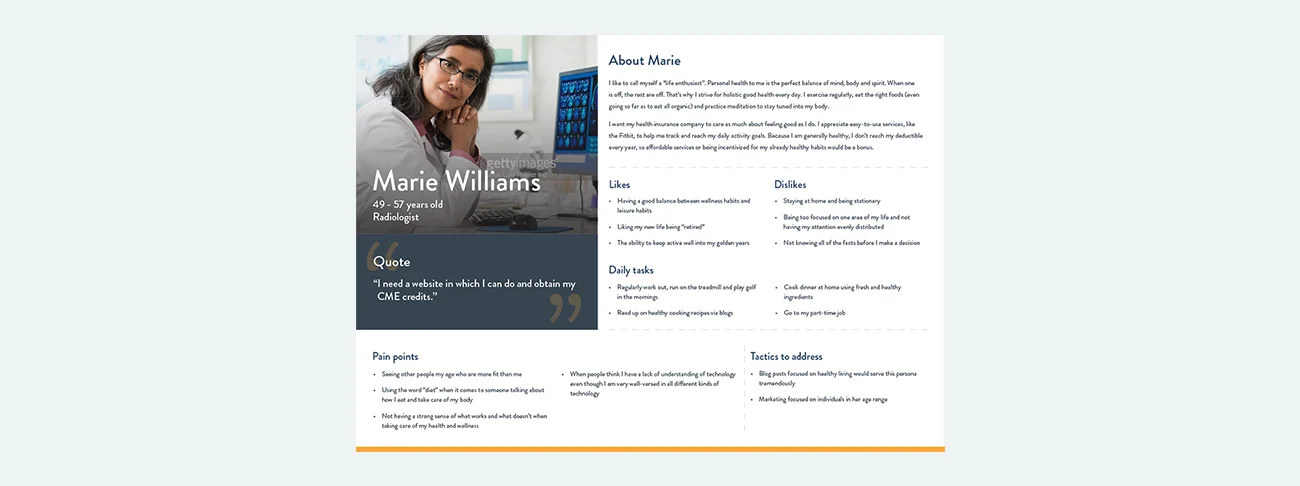
ACR member persona — Marie Williams, Radiologist
Member persona — Marie Williams, Radiologist
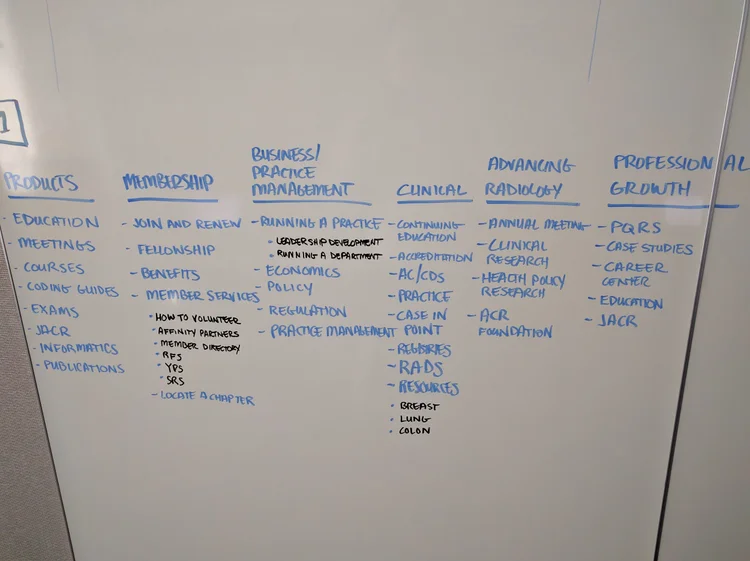
In-person IA workshop — whiteboard session
In-person IA workshop — content categorization
02
Information architecture user testing — at scale

Given the technical depth of ACR's content, the IA couldn't be designed in a vacuum. We needed input from users who understood the content categories — specialists who could tell us where they expected to find information, not just where we assumed they would look.

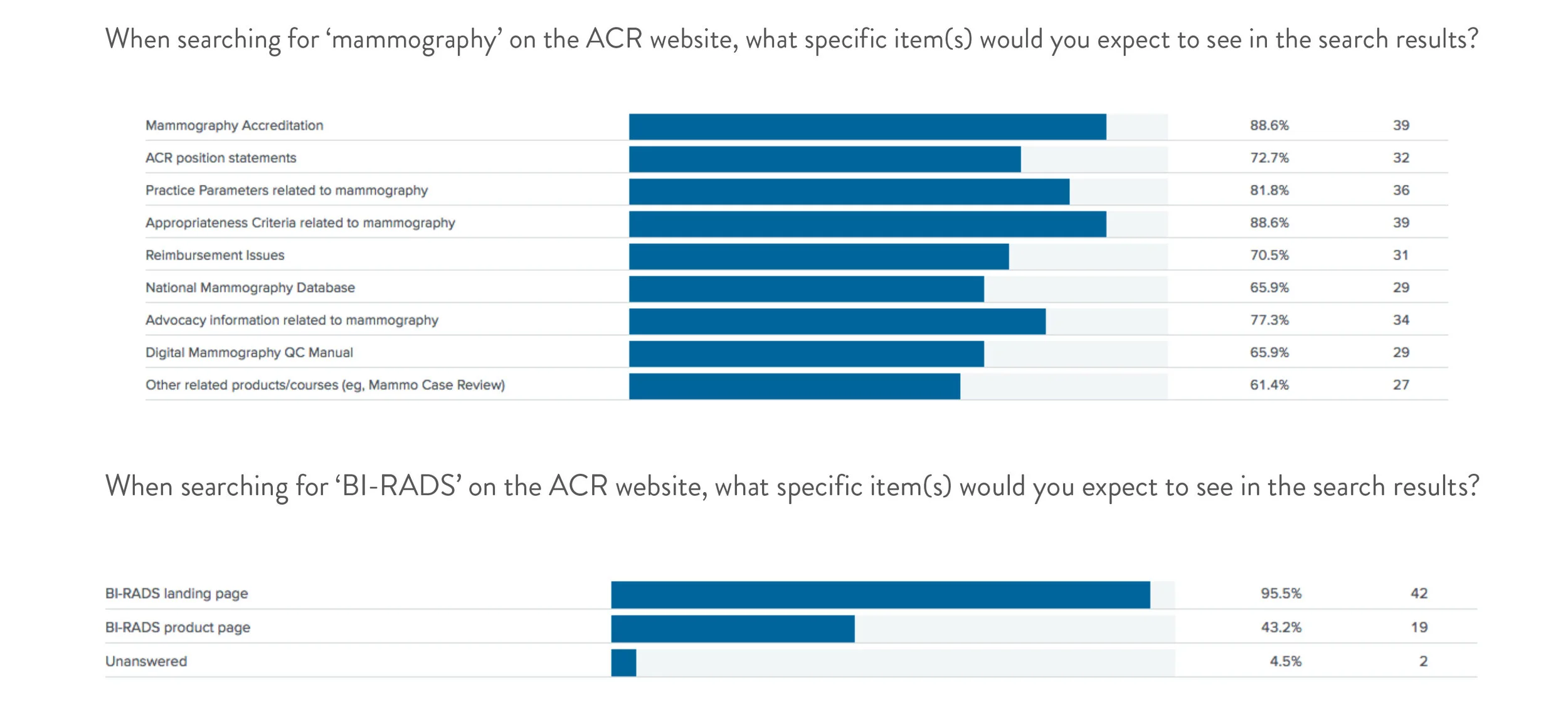
We ran multiple tree testing surveys across 1,000+ users, mapping where members navigated to find specific content within proposed navigation structures. The results directly shaped the final IA — eliminating assumptions and replacing them with evidence.

Tree testing · 1,000+ participants · Navigation research
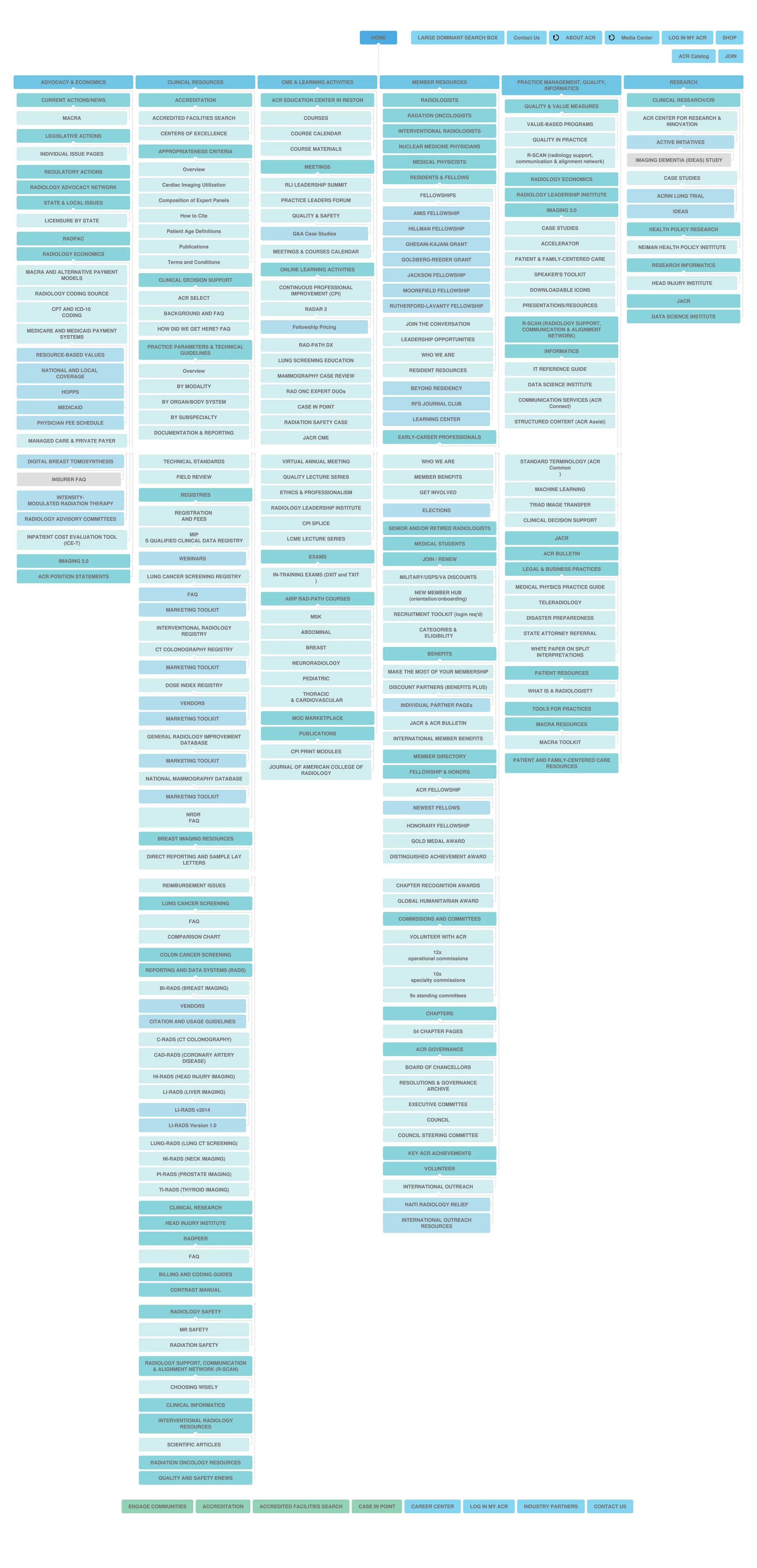
ACR full sitemap — information architecture
Full sitemap — 20,000+ pages restructured into a member-centered IA
Tree testing search findings — mammography and BI-RADS
Tree testing findings — navigation validation at scale
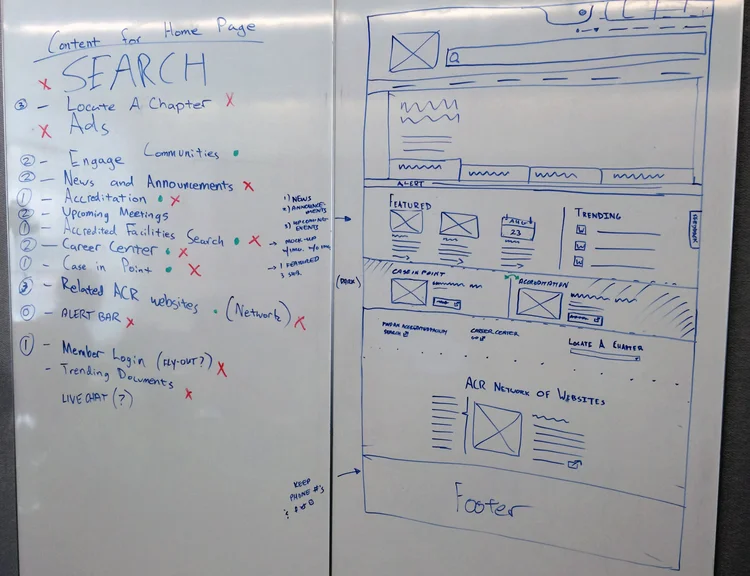
Homepage content planning whiteboard
Homepage content workshop — prioritization and structure
03
Design system built for an ecosystem, not just a site

ACR's digital footprint wasn't just one site — it was a family of microsites under one brand. The design system had to be flexible enough to accommodate a range of content types, team capabilities, and microsite purposes, while maintaining brand cohesion across all of them.

The system was built to give ACR's internal teams the tools to create without needing a design agency for every new initiative — reducing long-term dependency and accelerating their digital output.

Design system · Microsite framework · Brand flexibility
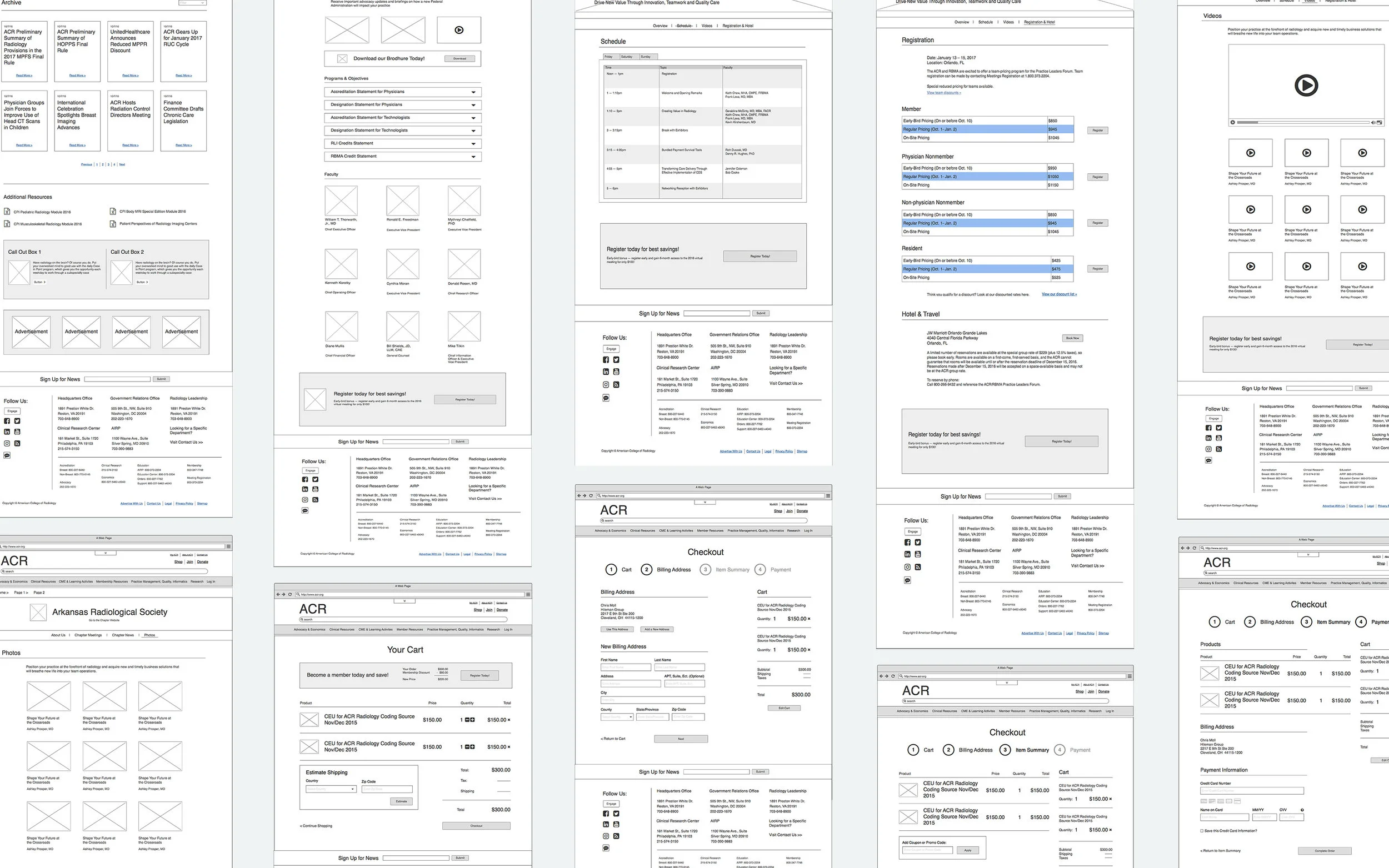
ACR wireframes — page layout exploration
Wireframes — page layouts across the site ecosystem
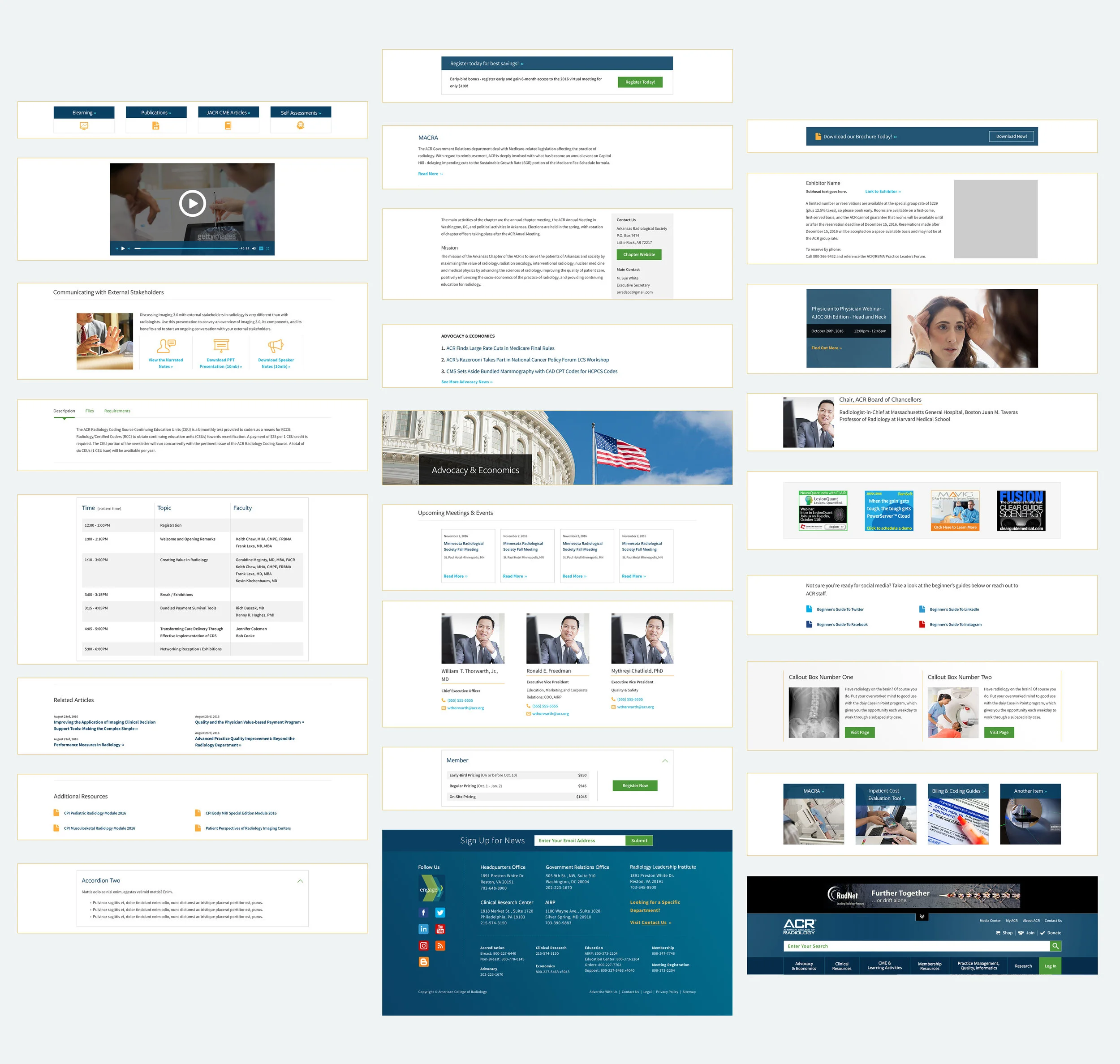
ACR design modules — component library
Design modules — flexible component system for the ACR brand
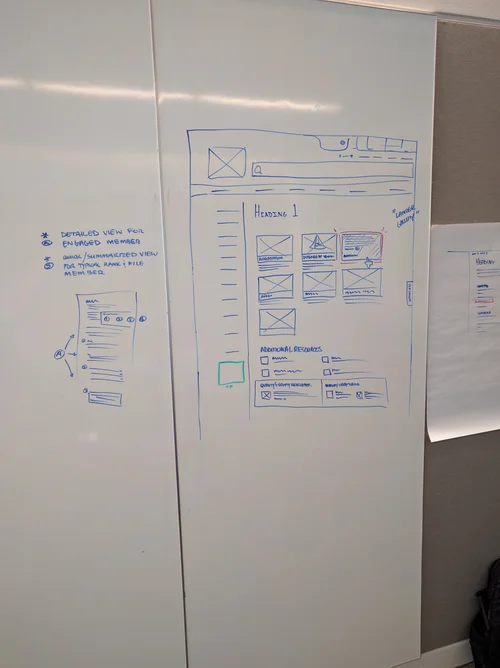
In-person wireframing session — whiteboard
In-person wireframing — working through layout decisions with stakeholders

A site with 20,000 pages and no defined personas isn't an information problem. It's a decision-making problem — nobody had established who it was for or what they needed.

On the ACR engagement

03 — Outcomes and impact
1K+
Users tested across multiple tree testing surveys to validate the IA
Research scale
4
Distinct member personas defined for the first time in ACR's history
Persona development
1
Flexible design system powering the main site and all microsites under the ACR brand
Design system

The most lasting outcome wasn't the redesigned site — it was the research infrastructure ACR now had. For the first time, they had defined personas grounded in real member interviews. They had evidence-based navigation validated by over 1,000 users. And they had a design system that meant future digital work could be done without starting from scratch every time.

The site went from an unnavigable archive to a structured, responsive, member-centered platform. The IA work alone eliminated years of accumulated assumption about how members found what they needed.

The lasting thing

ACR's 35,000 members got a site built around how they actually navigate and find information — grounded in research, not internal org structure.

Next case study
Eliminating a manual process — Intellicorp Drug Screening Portal