Protected case study

Digital Realty
Innovation Sprints

Incorrect password. Please try again.
← Back to work
All case studies
Case study 01 / 03
Enterprise Leadership · Design Facilitation

Five sprints. No title. Two funded concepts.

Before I had a Director title at Digital Realty, I designed and led a global innovation program — five sprints across five organizational teams, operating fully remotely across regions and time zones. No formal authority, no team, no fixed playbook. Two concepts were sponsored and advanced into multi-million-dollar initiatives. The role came after.

5 Sprints run
5 Senior teams
01 — The situation

Digital Realty's customer engagement model relied heavily on one-to-one interactions — resulting in long time-to-service and limited scalability. Leadership needed a faster, more systematic way to identify, validate, and advance customer-driven innovation across a globally distributed organization.

When Propane brought me in, the opportunity wasn't a defined project. It was a program design challenge: build a repeatable sprint framework that could operate fully remotely across regions and time zones, produce executive-ready outputs, and balance team autonomy with the kind of rigor leadership needed to make funding decisions.

Rather than centralizing innovation, I implemented a scalable design-led model that enabled global teams to generate and advance solutions independently — while I maintained program ownership, facilitation standards, and executive-facing outcomes across all five engagements. The sprint methodology was treated as a flexible system, not a fixed playbook. I modified activities and timelines in real time when global scheduling and team dynamics required it.

My formal authority was limited. I influenced results by partnering with regional leaders to maintain alignment, adapting to participant capabilities on the fly, and managing skepticism toward design by demonstrating concrete value at every stage — before anyone was asked to trust the process.

Client
Digital Realty (via Propane)
My role
Sole facilitator — no team, no co-lead, no formal authority within the org
Format
5 design sprints across 5 organizational teams
Participants
Senior stakeholders across each team — scheduling complexity required ~6-week timelines per sprint
Outcome
Multiple million-dollar projects generated for Propane · Staff augmentation role at Digital Realty evolved organically
02 — The five sprints
01 Team 1 — Senior cross-functional team · Problem defined, goal aligned, leadership-ready output delivered ~6 weeks
02 Team 2 — Senior cross-functional team · Problem defined, goal aligned, leadership-ready output delivered ~6 weeks
03 Team 3 — Senior cross-functional team · Problem defined, goal aligned, leadership-ready output delivered ~6 weeks
04 Team 4 — Senior cross-functional team · Problem defined, goal aligned, leadership-ready output delivered ~6 weeks
05
Team 5 — Sales, Operations & Product · Featured sprint
Giving sales and customers an accurate view of capacity — before a deal is lost to bad data
Sales and customers had no reliable, real-time view of Digital Realty's current and forthcoming inventory. The capacity report lacked granularity and accuracy. There was no process for capturing and reserving current inventory — meaning deals were being made on incomplete information, and delays and cost increases were the result.
The room included sales leads, operations directors, and product stakeholders. I opened with icebreakers to set a collaborative tone and required cameras on throughout — enforced with the help of VPs and Directors in the room. The sprint ran over ~6 weeks to accommodate the scheduling complexity of senior participants.
Problem Statement (authored in session): Sales and customers do not have an appropriate view into our current and forthcoming inventory. Lack of granularity and accuracy in the capacity report. Current process of capturing and reserving current inventory does not exist.
User impact surfaced: Sales and customers not presented with an accurate picture of what they can buy. Lack of accuracy resulting in delays and cost increases. Teams spending manual hours confirming data across multiple DLR work groups with no real-time source of truth.
Goal Statement (authored in session): Sales and customers can access an accurate picture of the capacity that is available; or will soon be available or needed, for them to use.
My role in the output: Conceptualization and wireframing — I defined the direction and produced the wireframes that went into the CEO presentation. Visual design and build were executed by the broader product team. I provided feedback throughout that process but did not own the visual layer. That's the right division of labor at the Director level.
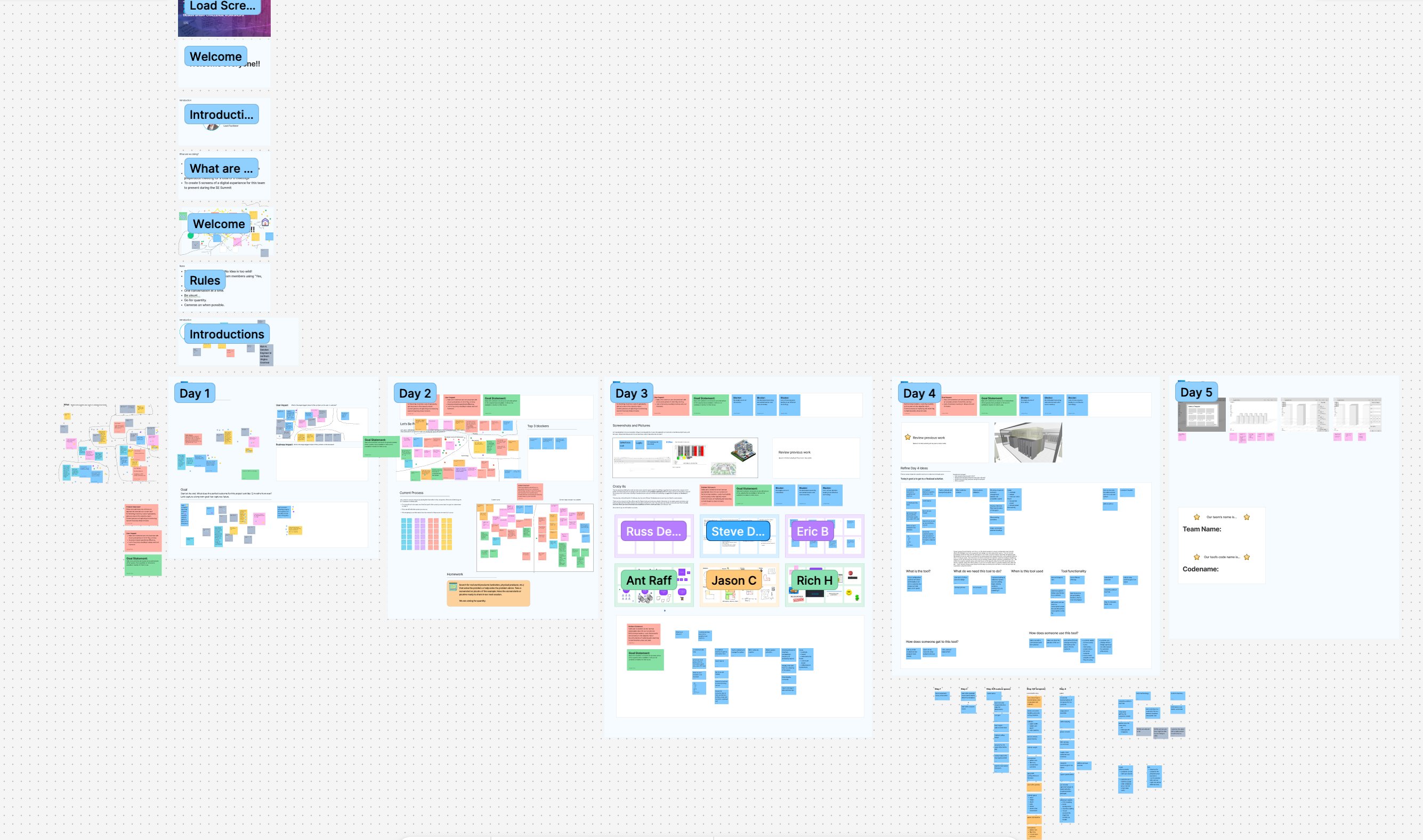
Digital Realty Team 5 sprint board — Day 1 through Day 5
Key decision
I authored the problem statement and goal statement in real time during the session — synthesizing what the room surfaced into language leadership could act on. The wireframes I produced from this sprint were integrated into a presentation delivered directly to C-suite leadership, including CEO Andy Power. The product you see built from this sprint is the result of that direction — not my visual execution.
~6 weeks
Sales · Ops · Product
→ CEO presentation
Capacity & inventory
02b — The product that was built

My role: conceptualization and wireframing. Visual design and build executed by the Digital Realty product team. I provided direction and feedback throughout.

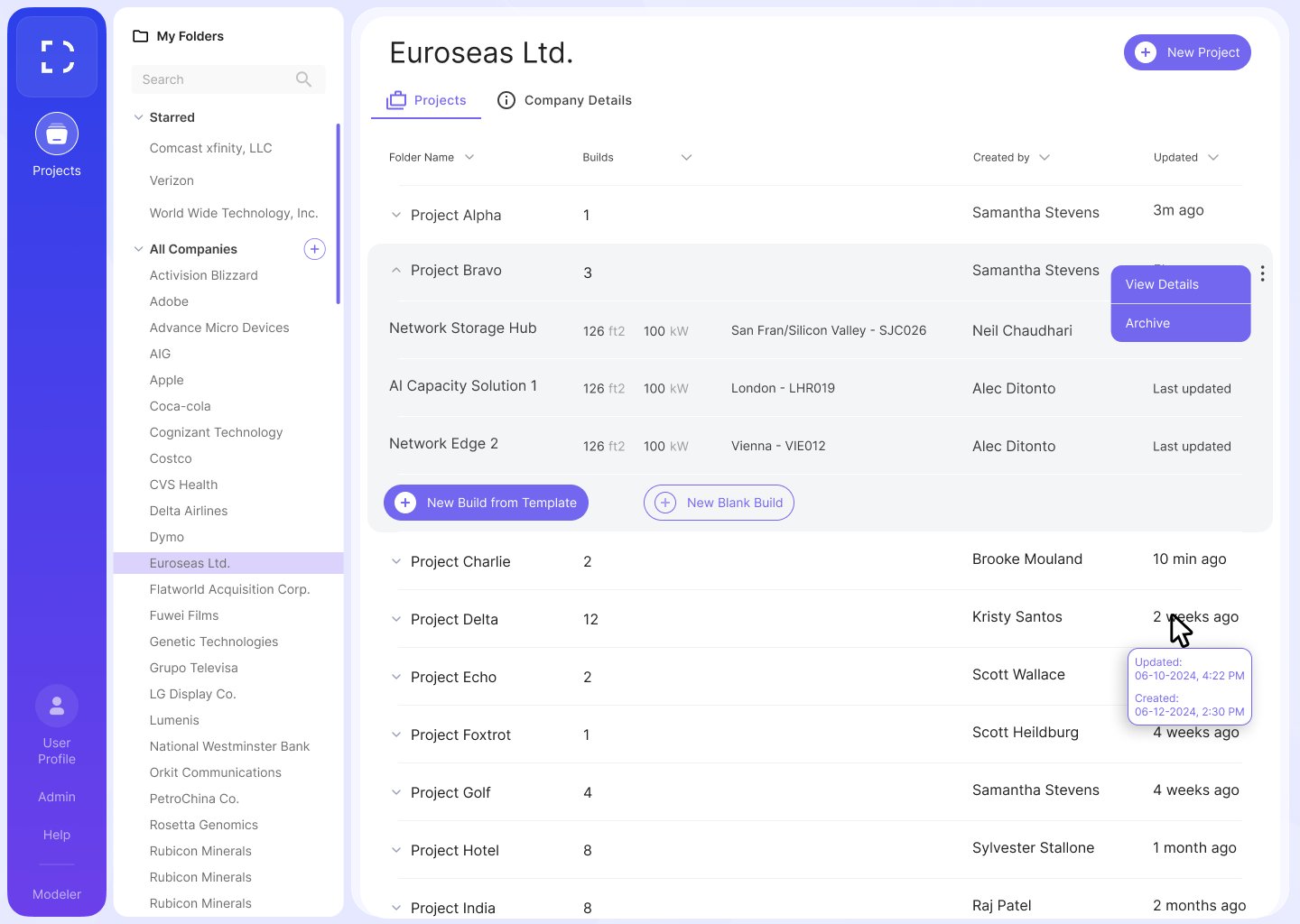
Projects and Companies view — DLR Builder
Projects & Companies
The project management layer — giving sales and ops a structured view of customer deployments across Digital Realty's global portfolio.
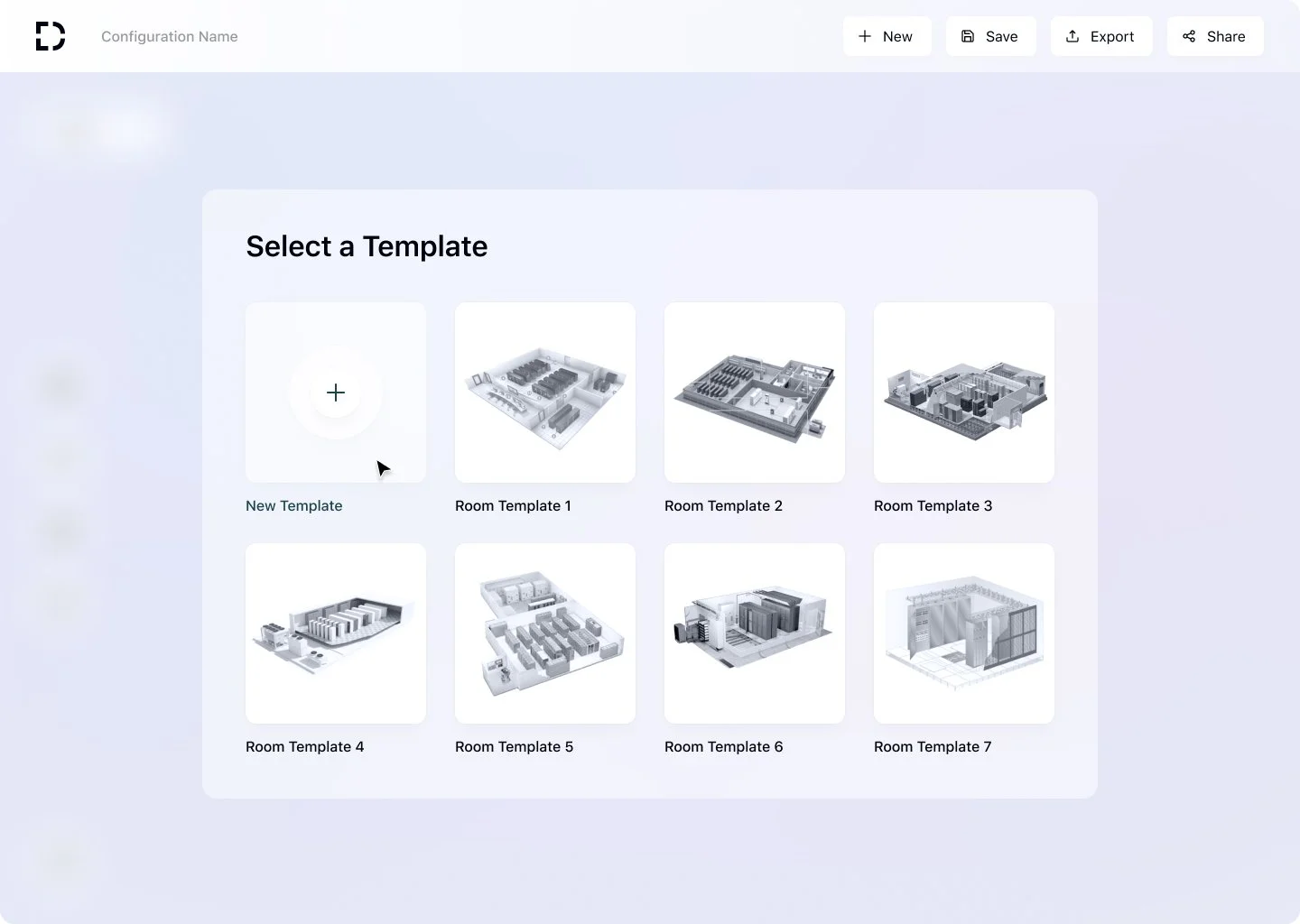
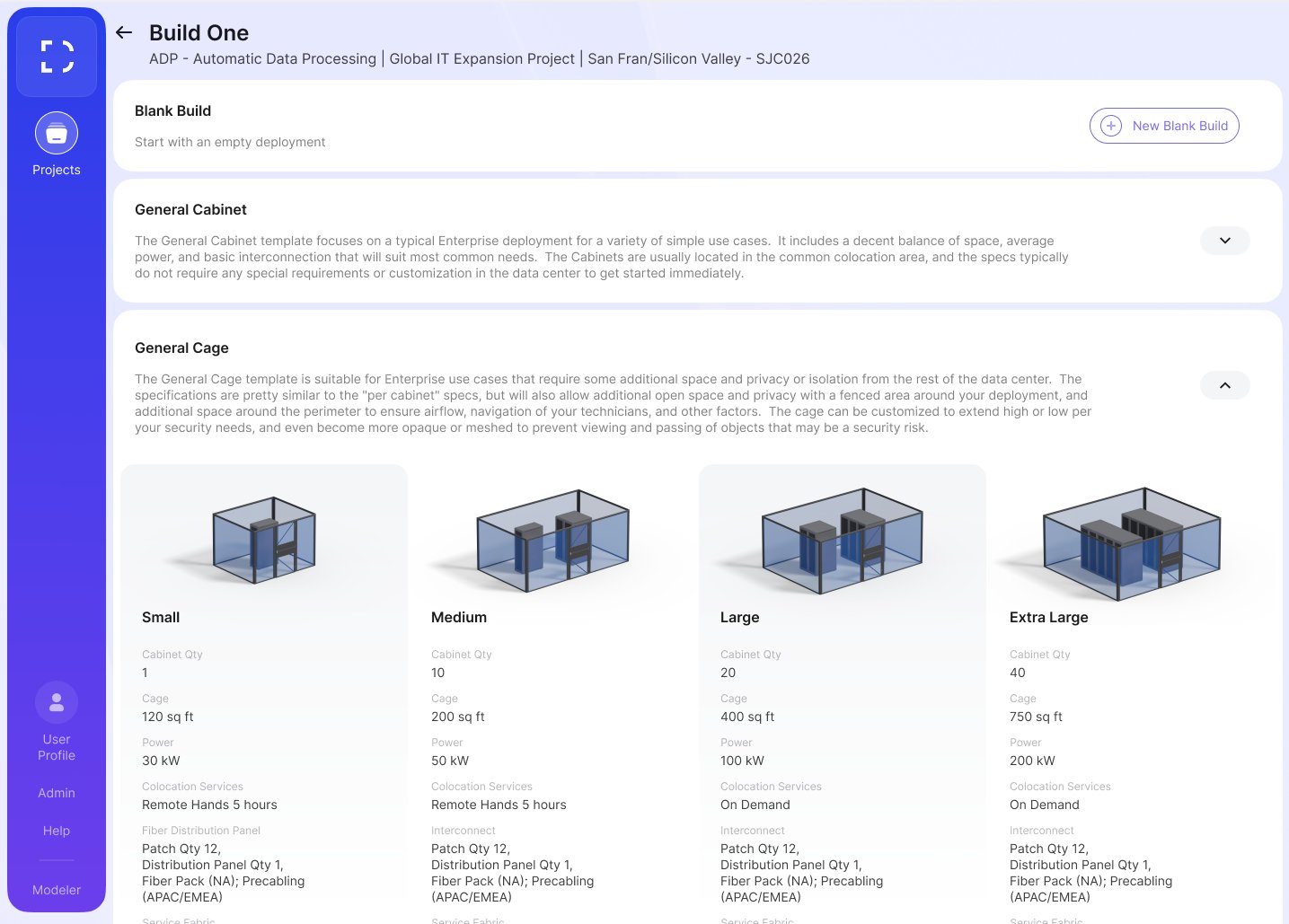
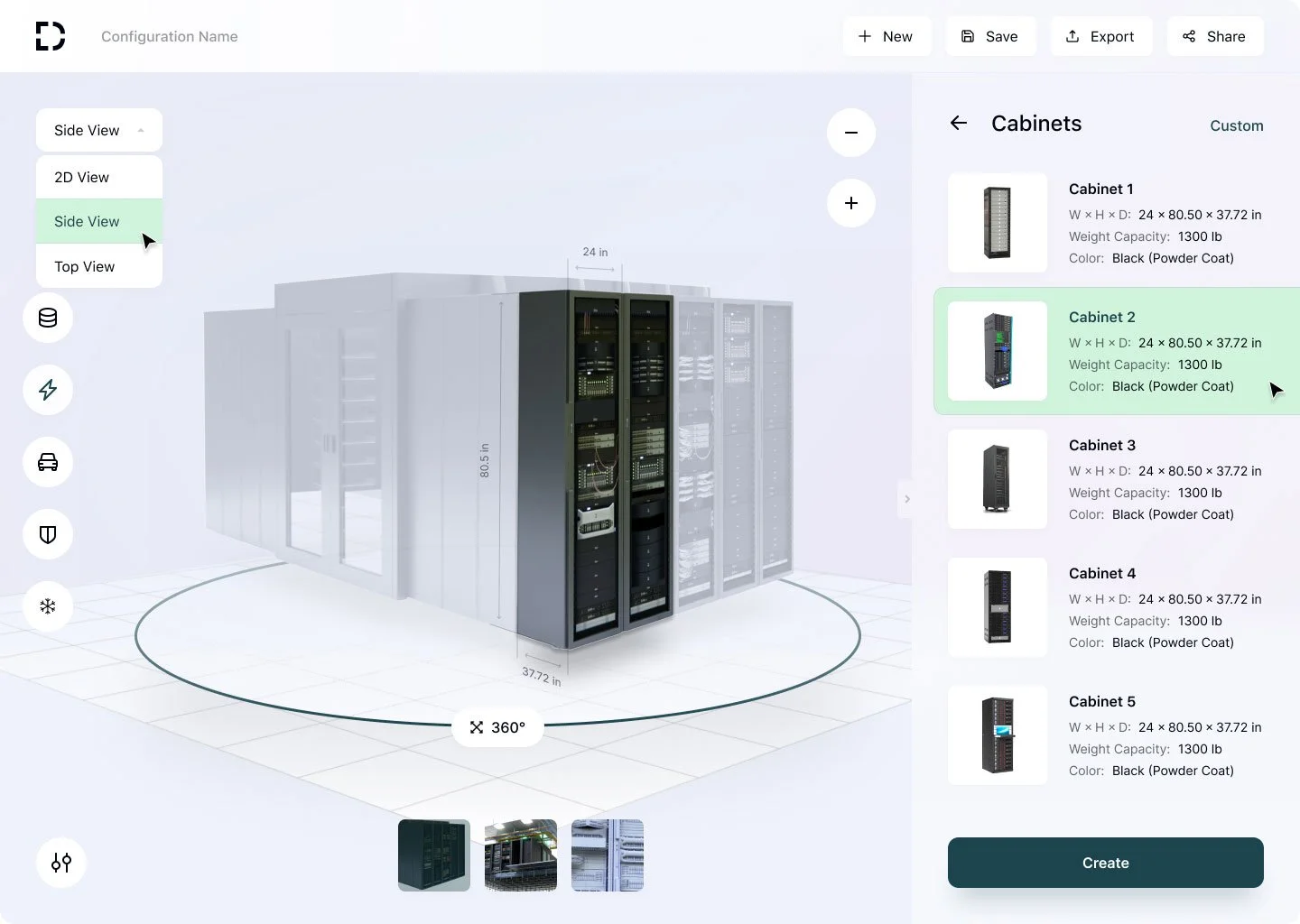
General Cage build template
Build Templates
Standardized cage and cabinet configurations — Small through Extra Large — with clear capacity, power, and interconnection specs. Directly addresses the inventory ambiguity surfaced in the sprint.
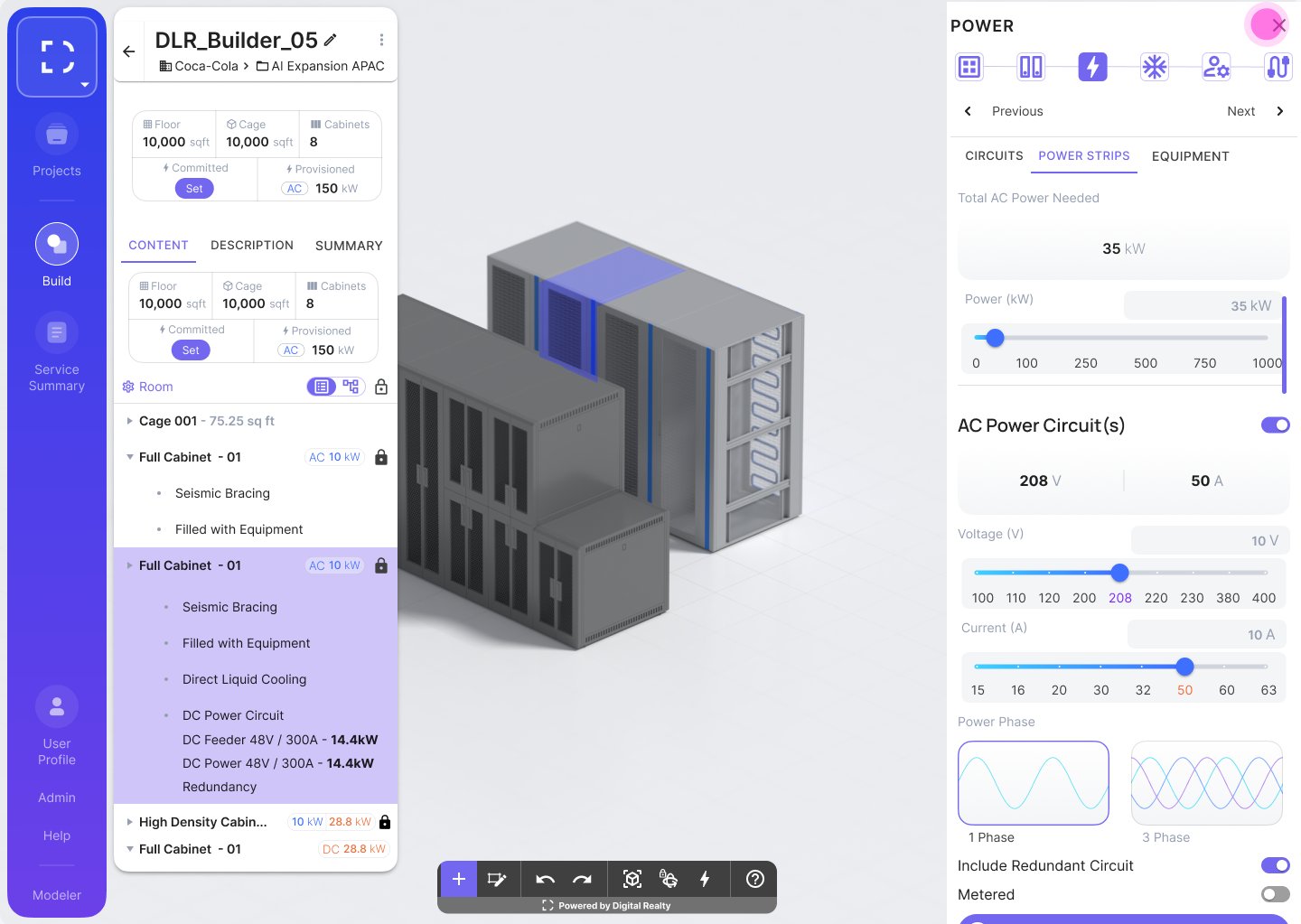
Power configuration panel — DLR Builder
Power Configuration
Granular power and circuit configuration — the kind of real-time, accurate capacity data the sprint identified as missing. Sales can now commit to deals with confidence in the numbers.
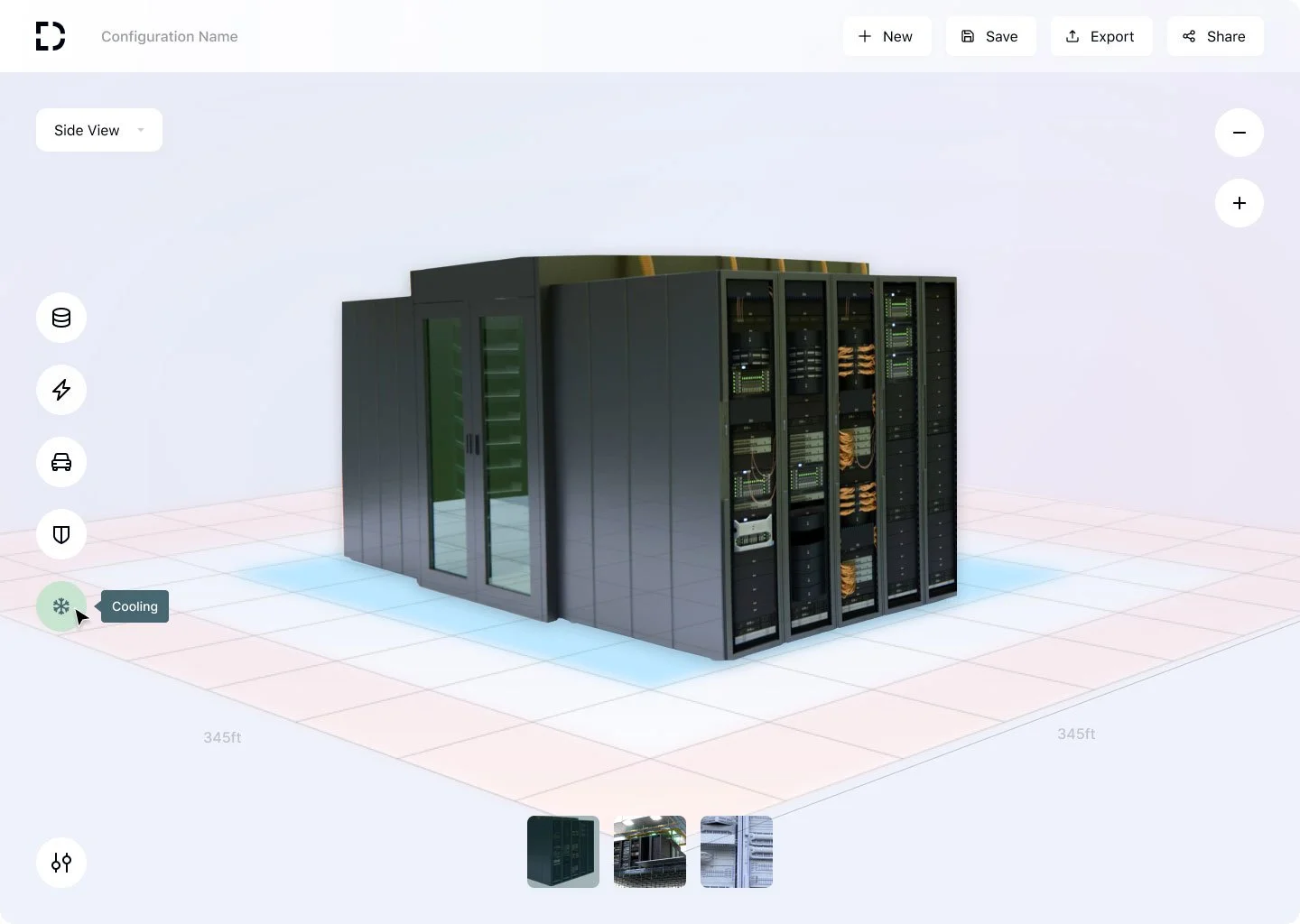
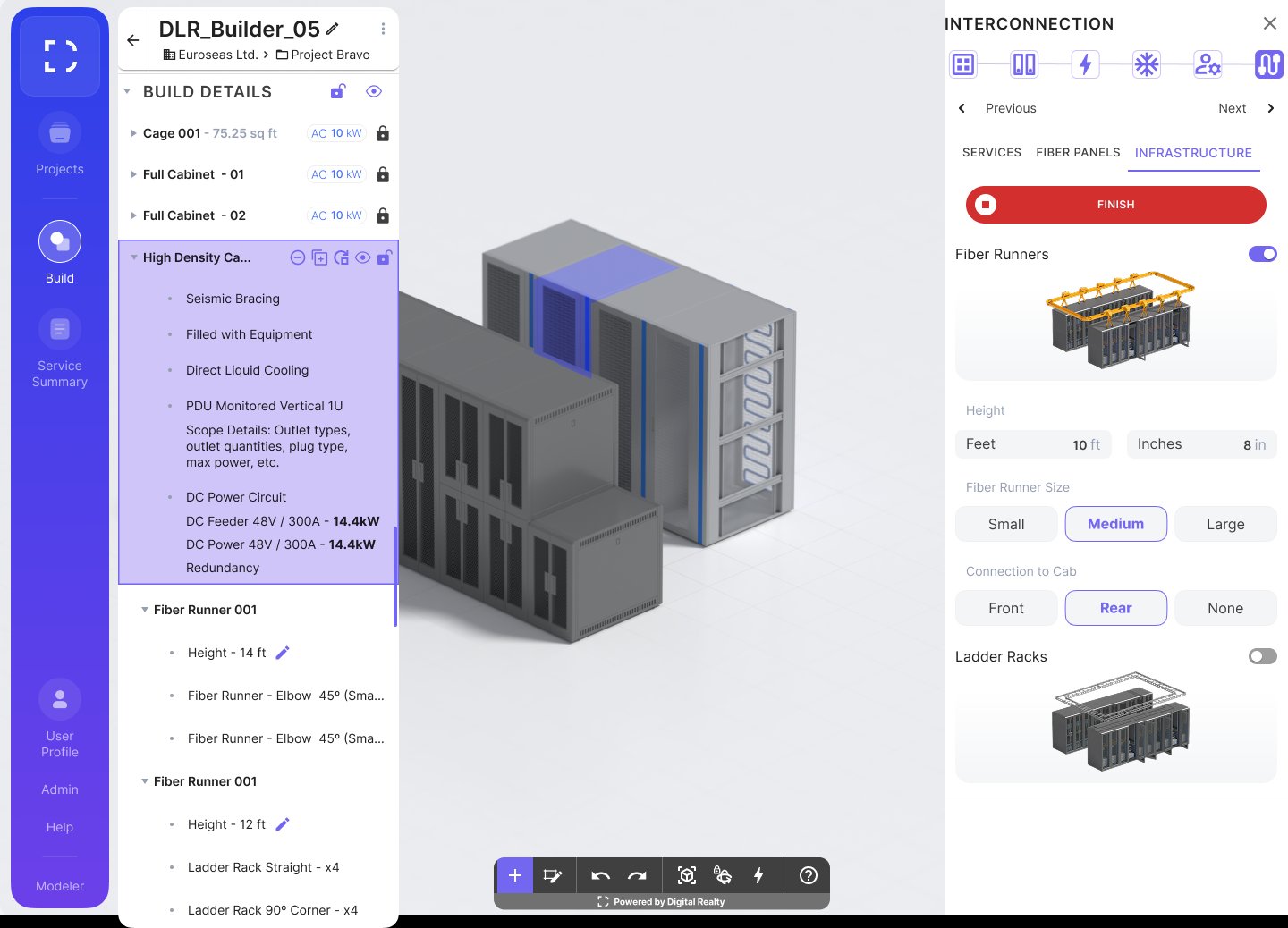
Interconnections ecosystem view
Interconnection & Infrastructure
Fiber runners, ladder racks, and interconnection infrastructure — configurable at the build level. The complexity is real; the UX makes it navigable.
03 — Leadership decisions that shaped the work
Decision 01
Set the tone before the work starts
Senior stakeholders in a virtual room default to passive observation. I opened every sprint with icebreakers and required cameras on throughout — enforcing participation with the support of the VPs and Directors in the room. The quality of input depends entirely on the quality of engagement.
Chose
Active participation from everyone, cameras on, psychological safety established before the work began
Not
A passive presentation format where senior people listen and junior people speak
Decision 02
Author the problem statement in the room, in real time
Rather than arriving with a pre-written brief, I synthesized what the room surfaced into a problem statement during the session itself. For Team 5 that became: "Sales and customers do not have an appropriate view into our current and forthcoming inventory." Written live, attributed, owned by the group — not handed down from outside.
Chose
Real-time synthesis — problem statement emerged from the room and was immediately recognized as true
Not
A pre-written brief that participants feel obligated to validate rather than challenge
Decision 03
Adapt the format to senior schedules without losing rigor
A standard 5-day sprint format wasn't viable with VPs, Directors, and cross-functional leads who had competing priorities. I stretched each sprint to ~6 weeks to preserve access to the right people without compromising the structured, decision-forcing nature of the format.
Chose
Flexible timelines that kept the right people in the room at the right moments
Not
A rigid format that would have excluded the decision-makers or substituted lower-level proxies
Decision 04
Own the direction, hand off the execution
My role was conceptualization and wireframing — defining the direction clearly enough that a visual design and build team could execute it without me in the room. The product built from Team 5's sprint reflects that handoff working well. I gave feedback throughout the visual design process but didn't own that layer. That's the right model at the Director level.
Chose
Clear wireframe direction + structured feedback — freeing the visual team to execute at their best
Not
Holding the visual work myself — which would have slowed delivery and undersold the team around me

The role didn't come with a title. It came with five rooms full of senior stakeholders who decided they wanted me to stay.

On earning authority without a title

04 — Outcomes and impact
5/5
Global teams delivered leadership-ready innovation pitches
Delivery
2
Concepts sponsored and advanced into multi-million-dollar initiatives for Propane
Business impact
1
Director of UX/UI role — earned through the work, not applied for
Career outcome

Five global teams delivered leadership-ready innovation pitches. Two concepts were sponsored and advanced — becoming multi-million-dollar initiatives for Propane. That's a measurable business return on a program run by one person, fully remotely, across regions and time zones.

The program also demonstrated something harder to quantify: that UX leadership embedded in business outcomes can move enterprise organizations faster than traditional consulting engagements. The sprint methodology wasn't a fixed playbook — it was a flexible system I adapted in real time to match participant capabilities and global scheduling realities. Managing skepticism toward design by demonstrating value through concrete progress at every stage was as much a part of the work as the facilitation itself.

The lasting outcome was the role. As a direct result of the engagement, Digital Realty brought me in via staff augmentation as Director of UX/UI — extending the work from program leadership into ongoing organizational ownership. The sprints didn't just produce fundable ideas. They established a repeatable model for global innovation and built the executive trust that made everything that followed possible.

05 — The lasting thing

Enterprise-scale innovation succeeds when UX leadership is embedded in business outcomes. The program produced fundable ideas — and established the executive trust that made everything that followed possible.

Next case study
From broken system to enterprise infrastructure — Digital Realty Platform